Discover the Playful Power of Balonku
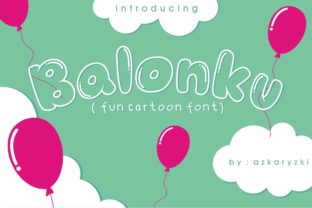
For designers and creators seeking a unique visual identity, Balonku offers a fresh approach to typography. This decorative font, inspired by balloons and soap bubbles, brings a whimsical energy to any project that requires a lighthearted or youthful aesthetic. Whether for children's branding, event invitations, or creative marketing materials, Balonku stands out as a versatile and expressive typeface.
Unlike traditional fonts that prioritize clarity and structure, Balonku embraces fluidity and charm. Its rounded, inflated shapes mimic the look of floating balloons, while subtle variations in stroke width and curvature add a sense of movement. These design choices make it ideal for projects where playfulness is a key element.
Key Characteristics of Balonku
One of the most notable aspects of Balonku is its distinct visual style. Each letterform appears to be gently inflated, creating a soft and approachable appearance. The font’s curves are smooth and consistent, with minimal sharp edges, reinforcing its association with bubbles and balloons. This design choice not only enhances its visual appeal but also makes it highly recognizable.
Balonku also offers a range of stylistic alternates, allowing users to customize the font to better suit their design needs. These variations include different levels of inflation, subtle texture effects, and alternative glyph shapes. Such flexibility ensures that the font can adapt to various contexts without losing its core character.
Another advantage of Balonku is its readability in smaller sizes. While some decorative fonts become difficult to read at reduced scales, Balonku maintains legibility due to its clear spacing and well-proportioned forms. This makes it suitable for use in both large-scale displays and more detailed layouts.
Practical Applications and Use Cases
When considering where Balonku fits best, it’s important to think about the tone and audience of a project. The font excels in environments where a playful or nostalgic feel is desired. For example, it works exceptionally well for birthday party invitations, children’s books, or promotional materials for kid-friendly products.
Businesses targeting young audiences, such as toy stores, educational platforms, or family-oriented services, can benefit from using Balonku to create a more engaging brand presence. Its visual personality helps convey warmth and creativity, which can resonate strongly with parents and caregivers.
In digital design, Balonku can be used to add a touch of personality to websites, social media graphics, or mobile app interfaces. It’s particularly effective when paired with other playful elements, such as illustrations or bold colors, to create a cohesive and inviting visual language.
Evaluating Performance and Usability
From a usability standpoint, Balonku performs well in most design software, including Adobe Creative Suite, Figma, and Canva. Its file format is typically available as a standard font file (TTF or OTF), making it easy to integrate into existing workflows. Users should ensure they have the appropriate licensing for commercial use, as this can vary depending on the source.
The font’s consistency across different platforms and devices is another factor worth noting. When used correctly, Balonku retains its visual integrity whether displayed on a screen, printed on paper, or embedded in a digital document. This reliability is essential for maintaining a professional appearance across multiple mediums.
However, it’s important to recognize that Balonku may not be suitable for all types of projects. In more formal or corporate settings, its playful nature could be seen as inappropriate or unprofessional. Designers should carefully consider the context and audience before deciding to use it.
Strengths and Limitations
Balonku’s greatest strength lies in its ability to evoke emotion and convey a specific mood. Its visual language is immediately recognizable, making it an effective tool for storytelling and brand expression. This emotional connection can be especially valuable in marketing campaigns aimed at younger demographics or those seeking a more personal touch.
Despite its advantages, there are limitations to its use. For instance, the font’s stylized appearance may not align with minimalist or modern design trends. Additionally, its limited range of weights and styles means that it may not offer the same level of versatility as more traditional typefaces.
Another consideration is the potential for overuse. Because of its distinctive look, Balonku can become overwhelming if not used sparingly. Designers should balance its presence with other typographic elements to avoid visual clutter and maintain a polished overall composition.
Who Benefits Most from Balonku?
Creators who work with children, such as illustrators, educators, and content developers, will find Balonku to be a valuable addition to their toolkit. Its playful nature supports the development of engaging and interactive materials that capture attention and encourage participation.
Entrepreneurs and small business owners looking to differentiate their brand can also benefit from using Balonku. By incorporating this font into logos, packaging, or advertising, they can create a memorable and distinctive identity that stands out in a competitive market.
Freelancers and designers working on creative projects, such as event planning, branding, or digital art, may find that Balonku adds a unique flair to their work. It can help set their designs apart from others and provide a fresh perspective on typography.
Final Thoughts on Balonku
Balonku is more than just a decorative font—it’s a design asset that can enhance the visual storytelling of a project. Its ability to convey playfulness, warmth, and creativity makes it a compelling choice for a wide range of applications. However, like any design tool, it requires thoughtful use to achieve the best results.
For those looking to add a touch of whimsy to their work, Balonku offers a reliable and expressive option. Whether used in print, digital, or mixed-media formats, it has the potential to elevate a design and leave a lasting impression. As with any creative decision, the key is to align its use with the goals and values of the project at hand.